Search This Blog

Sunday, March 27, 2011

The Spice of Life: Thai Green Curry Chicken

Thai Green Curry Chicken


Another thick blanket of snow covers the garden. Though Spring is here on the calendar, the teasing glimpses of bare muddy ground, covered the next day in white bring me back to reality. In truth, Spring in the north woods is more an idea than a season. It will be May before pots of Pansies will sit on the porch steps here; another 5 weeks or more to go and snow is not unheard of, even then. But the days are brighter now as the sun continues to climb higher into the sky. 


Chamomile in the herb garden


This is the time of year that I pour over seed catalogs and read through page after page on the Friends School Plant Sale website. This is the largest plant sale in the Midwest, held every Mother's Day weekend on the state fairgrounds in St. Paul. Looking over the online catalog, I swoon at descriptions of Vietnamese Coriander and Thai Basil, Lemon Verbena and Winter Savory. I can almost smell their heady fragrance as I warm my chilly fingers, curling them around a second cup of coffee. Living in a small northern Minnesota town where such flavors may as well come from the moon, the prospect of planting 'exotic' herbs in my own garden this spring is no small excitement. In the mean time, I look to my pantry for inspiration.


I rarely use prepared ingredients when I cook, but there are some things that are so foreign to this part of the world that the procurement of the fresh ingredients to make them would be a formidable task. Mae Ploy Thai Curry Paste is one of the items in my refrigerator that give me an instant burst of flavor and warmth whenever I reach for it.

In Minnesota there is a level of spiciness that I call “Minnesota Hot”. It is any degree of even the most minor of heat in food. Freshly ground Black Pepper falls into this category for some of our citizens. Therefore, if you are not a fan of hot food, be warned. Thai red and green curries tend to be very hot even to practiced tastes. If you like some degree of heat, add a little curry paste and taste it. As for any seasoning or spice, you can always add more but you cannot take away once it is in the dish. Alternately, try a different paste such as Panaeng curry paste, generally much milder than green curry, but the same rules apply. 


Though there are a half dozen or more different kinds of curry in Thai cuisine (red, yellow and panaeng curry are just a few examples) my favorite is the citrusy-sweet-hot flavor of green curry. When I need a burst of spice in my life to warm up both body and soul, this quick curry is one of my favorites. It can also be made in an astonishingly short amount of time.

Thai Green Curry Chicken
This is an Americanized version of a traditional Thai dish. This type of curry is usually served with rice. If you can find fresh Thai Basil, it is a marvelous addition.


1 can Coconut Milk
1 cup low sodium Chicken Stock
1 tsp to 1 Tbsp Mae Ploy brand Green Curry Paste
½ tsp Lemongrass puree, if desired
2 Chicken Thighs, skinned, boned and cut into bite size pieces
1 Carrot, split lengthwise and bias cut
Handful of Snow Peas, fresh or frozen
½ Red Pepper, julienne cut
½ Yellow Onion, julienne cut
1 cup Fresh or Frozen Peas
Kosher Salt, to taste


Jasmine Rice


If you are serving rice, start your rice cooking first. The curry cooks very quickly and will likely be finished before the rice. 1½ cups of water to ¾ cup of rice should be ample quantity for 4 people. If you dislike starchy rice, rinse the dry rice until the water runs clear before cooking.


In a medium saucepan, combine the coconut milk and the chicken stock over medium high heat. Add the curry paste and lemongrass, if using, and stir well to dissolve into the liquid. If you are making this for the first time, start with a small amount of curry paste, taste the mixture and add more until the desired heat level is reached.
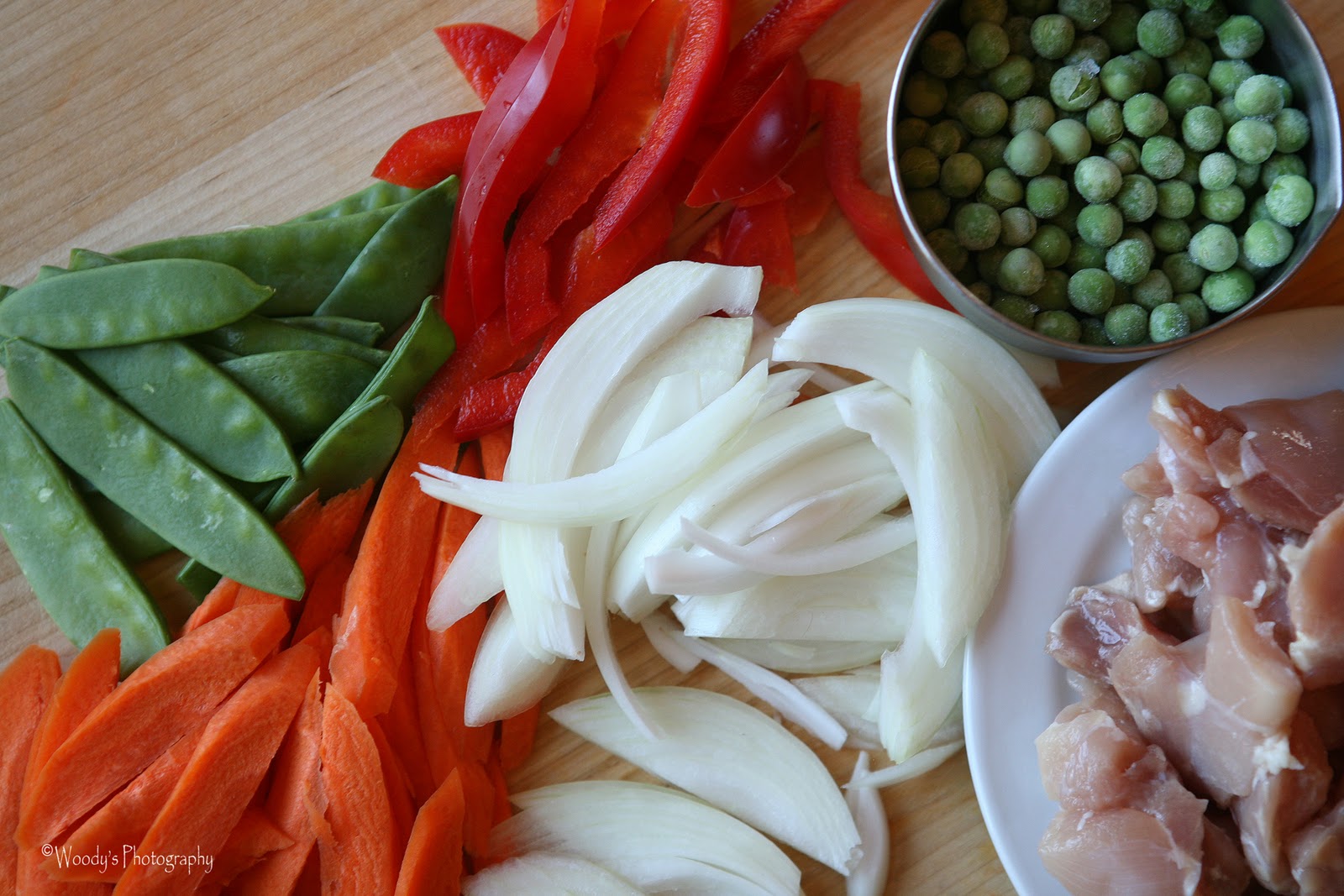


Add the chicken to the coconut milk mixture and simmer a few minutes. Add vegetables, hardest texture to softest, a few minutes apart as the curry simmers. Cook until vegetables are crisp-tender. Season with salt to taste. The entire cooking process will take only about 15 minutes. Serves 4.


Recipe Notes:
  • I have used generally available local organic vegetables in this curry along with homemade chicken stock. Play with the ingredients as you wish.
  • Cutting the vegetables into approximately equal thickness looks great and allows them to cook at a relatively even rate.
  • Jasmine Rice is my preference for this dish. It is beautifully fragrant and pairs well with the curry.
  • You can find Mae Ploy curry pastes online, or at Asian and specialty groceries.
  • Chicken thigh meat lends itself much more to spice than does breast meat. It also has a more pleasing texture in soups. Buy bone in thighs, trim them and add the bones to the 'future stock' container in your freezer. Not only will you save money per pound on the chicken, once you have enough bones, carrot, onion and celery trimmings you are ready to make stock – for free.

Sunday, March 20, 2011

Of Painted Eggs and Chocolate Bunnies


Lamb kebab with a spring green salad to celebrate the Equinox


I have always been a history geek. Perhaps it is the influence of my military upbringing or family roots in Celtic countries but I love to see the way we have remade ourselves and reinvented our histories, generation after generation. 


Spring greens indoors


History is written by the victors, they say, but those overthrown  are never completely willing to give up their own stories of place and purpose. Native American peoples are an example. You can force them onto reservations, place their children in missionary schools and punish them severely if they do not speak English, but you cannot take away who they are as a people. 

In 735, it was noted by the English historian Bede (a monk) that the Anglo-Saxon goddess Eostre had a festival lasting several days, and that her name was adopted for the Christian holiday of Easter, which falls on the Sunday after the full moon following the spring equinox.


Spring peas, shallots and dill
Christianity, as it became the dominant religion of Europe, developed a strategy of 'if you can't beat them, join them' when it came to ritual festivals of the ancient world. Eostre, the goddess of Spring and Fertility (Ostara in Celtic lands) was not going to cease to be an important festival, so it was adopted by the church instead; much as was done with the winter solstice and christmas celebrations. The spring lamb, bunnies, baby chicks, hunts for painted eggs and decorating with fresh flowers on this date are all carry-overs from these ancient roots of the celebration of the earth's renewal and rebirth.


Ready for planting

Today is the Spring Equinox and while I am not a religious person of any persuasion, I do love the thought of honoring this oldest of feast days with traditional foods and celebrating a bit of nearly forgotten history. I will plant my herb seeds and then, a Spinach Salad with chopped Shallots, Spring Peas, Eggs and Dill along with Lamb Skewers with Baby Onions and Potatoes will bring together the flavors of the season.

If only I had some Mead to pour onto my garden...


Lemon Marinated Lamb Kebabs with Pearl Onions & Potatoes
Serves 2


Nothing beats the flavor of local grass fed lamb


2 Tbsp Olive Oil
Zest and Juice from ½ small Lemon
Few leaves of Dried Oregano
Kosher Salt and Fresh Ground Pepper
3/4# cubed Lamb pieces
6 Pearl Onions
6 tiny Potatoes, cooked and cooled


Oregano from the pantry


Mix together the olive oil, lemon zest and juice. Rub the oregano leaves in your palms over the bowl to release their flavor. Add the lamb, onions and potatoes. Season with salt and pepper. Toss together until well coated. Cover and place in the refrigerator 1 hour or more to marinate.

Alternate marinated lamb pieces, onion and potatoes onto skewers. Grill over a hot fire to desired doneness. Serve with a spring salad.

Thursday, March 17, 2011

My Little Lamby Pie

Shepherd's Pie


As a young child visiting her grandparents at their Georgia farm for the summer, my mother once asked her Irish grandmother where their family was from. The stern reply came in two sharply punctuated words: North Georgia. 


In the 1930's in the southern United States, if one wanted employment it was unwise to advertise the fact that your family was Irish and it was clear to my mother that she was never to ask about it again. Later, her mother Sadie took her aside and pointed on a map to County Limerick in Ireland. She quietly explained her family's geographical roots and then, like her mother, apparently never spoke of it again.

When I queried my own mother about her roots while reading The Oxford History of Ireland, she recounted the story and lamented that she did not know more. Her mother was 100% Irish and her father nearly so. 


Nothing beats a wind-up fire breathing Nun for entertainment


My own generation, like so many other latter generation Irish-Americans, has wholeheartedly embraced this Emerald Isle heritage, now diluted but none the worse for wear, especially once a bit of Irish Whiskey is applied. So today, we cook up the last of the potatoes from the root cellar, pour the Guinness and 'the good whiskey', toast the ancestors and celebrate our Irish-ness, real or imagined. 


While Corned Beef and Cabbage is standard fare on the 17th of March in this country, it is not often eaten in Ireland and certainly not on St. Patrick's Day. A more common (and to me much more palatable) Irish dish is Shepherd's Pie. Traditionally made with lamb, it can be made with ground beef, lamb or a combination. I have also used 'Gimme Lean' to make a vegetarian version with great success. 


Look for local producers of grass fed animals for the best flavor
Because I happened to have beautiful, local grass fed beef and lamb in my freezer, my choice was simple. Shepherd's Pie is an easy, relatively quick dish with lots of flavor. It also freezes well for future dinners. Brown the ground meat, toss in some veggies, herbs and a little stock while you are boiling the potatoes in another pan and in about an hour, you have dinner. 


Whether you are celebrating your own family heritage or the Saint Himself, pour a toast and tip one back to the Old Country: 


                                                                 “Here's to Cheating
Here's to Stealing
Here's to Fighting
Here's to Drinking

If you cheat, may you cheat death;
If you steal, may you steal a ladies heart;
If you fight, may you fight for a brother;
and if you drink, may you drink among friends.”
Slainte'!


Shepherd's Pie
Modify this dish as you wish with what you have on hand. Ground beef instead of lamb and frozen veggies from last season's garden work just fine. This is sized for an Irish Catholic size family and may easily be halved for smaller portions.

1 Tbsp Olive Oil
1 c. Celery, chopped
1 c. Onion, chopped
1 c. Carrot, chopped
1 c. Frozen Peas
½ -1 c. Leek, Parsnip, Fennel, chopped, if desired – use what you have
1 Sweet Potato, chopped, if desired
Kosher Salt and Fresh Ground Pepper to taste
Fresh or dried Thyme
Fresh or dried Rosemary
2# ground Lamb
1 # ground Beef
1 tsp Crushed Garlic
2 Bay Leaves
2 c. Beef Stock

Mashed Red Potatoes – These should be mashed until soft with a bit of butter and milk to make them easily spreadable. Or use up leftover mashed potatoes if you like.


 Saute chopped veggies and peas in olive oil just until softened. Season with herbs, salt and pepper.
Brown meat in a separate pan. Add garlic and stock, and stir in veggies. Adjust seasonings.
Pour the mixture into a casserole dish and top with the mashed potatoes.
Bake at 350 degrees until bubbly and brown, about 30-40 minutes.


Recipe Notes:
  • Whenever using dried herbs remember 2 things; you will need less volume of dried than you would fresh, and always rub the dried herbs between your palms to release their flavor.
  • If you are making a vegetarian version with 'Gimme Lean' or a similar product, I find the sausage style has the best flavor.
  • This recipe is made to be improvised. Substitute what you have in your refrigerator or freezer. Lamb too expensive? Use Hamburger. No Sweet Potatoes? Leave them out. This is a peasant dish.
  • I leave the skins on the potatoes when I mash them as a matter of preference. Mashed red skin or Yukon Gold potatoes work best for this dish.


Monday, February 28, 2011

Date Night


After vacationing in Palm Springs in the dead of winter, returning to below zero weather seems somehow exaggerated. The cold is colder, my coat seems bulkier and my once shiny tropical colored pedicure is now dull *sigh*. I confess that I was awestruck by the palm trees, colorful citrus trees hanging heavy with fruit in nearly everyone's yard and the overall opulence that is California. 


The stars in my eyes have faded but luckily, I did have the foresight to pack some wonderful reminders of that magical land to cook with when I returned home. I brought home a few pieces of incredible citrus, some olive oil and orange blossom honey from the farmers market and dates; beautiful, golden Halawy and deep brown Khadrawy dates grown just a few miles from where I was staying. But, what to do with dates in Minnesota? 


I could definitely stuff them with goat cheese and bacon wrap them. YUM. I have already added them to Apple Crisp and tossed them into a cabbage slaw with nuts and citrus and I will have a batch of oatmeal cookie batter with walnuts and dates in the freezer to bake later. 


But now, I am thinking dinner. Being a giant fan of Mediterranean flavors and North African flavors in particular, it wasn't hard to decide on Moroccan Date and Apricot stuffed Chicken Breasts.


Moroccan Date and Apricot stuffed Chicken Breasts


2 Bone-in, Skin-on Chicken Breasts, pounded to an even thickness

Stuffing:
1 c. low sodium Chicken Stock
¾ cup plain Couscous
½ Orange, skinned, seeded and chopped
½ cup diced Dates
½ cup diced dried Apricots
2 Tbsp Moroccan Olives or other dry cured black olives, chopped
2 Tbsp toasted Pinenuts
1 tsp Cumin
½ tsp each Cinnamon and Ras el Hanout*
Kosher Salt to taste


Heat chicken stock to a simmer over a medium heat. Add couscous and stir. Add remaining ingredients, toss together and remove from heat. Let stand 5 minutes. 


Lay out the pounded breasts, skin side down. Mound the couscous stuffing on the chicken breast and pull the ends up over the couscous. Use skewers or tie the breasts to hold the meat in place. 


Brown the rolls briefly, skin side down in a little olive oil in a saute pan, then turn each skin side up into an ovenproof pan. 


Place the chicken breasts in a 350 degree oven for 30-40 minutes until the internal temperature reaches 160 degrees. Let the chicken rest 10 minutes. The temperature will continue to rise until it exceeds 165 degrees (essential for chicken to be cooked thoroughly). Remove the skewers and slice the breasts into thick slices.


Sauce:
Juice and pulp of ½ of an Orange (about ½ cup)
¼ cup Chicken Stock
1 Tbsp Olive Oil
1 – 1½ Tbsp Honey
1 tsp Ginger Puree or grated fresh ginger
1/8 tsp each Cinnamon, Cumin and Ras el Hanout
Kosher Salt to taste


While the chicken is roasting, squeeze the remaining orange half into a small saute pan. Add the chicken stock and olive oil. Heat together to a low simmer. Add honey, ginger and spices and heat through. Taste and season as needed. 


Pour a little of the sauce over the roasted, sliced chicken breasts. Serve with any remaining couscous and a salad. Think warm California thoughts.


notes:
  • *Ras el Hanout is a middle eastern spice blend that translates to something like 'top of the house' or the 'house blend'. You can buy it ready made or find a number of recipes on line with which you can experiment and create your own 'house blend'.


  • Save those bones! Buying bone in poultry is almost always cheaper than boneless. Whether you are roasting whole birds or creating your own boneless cuts, save the bones in a container along with onion peels, celery and carrot trimmings. This gives you the makings of chicken stock whenever you are ready to make it without any additional cost.
     
  • Fresh ginger can be kept in the freezer and grated as you need it or you can often find ready to use ginger puree in a tube near the herbs in your local market.


  •  Pinenuts are best toasted in a small saute pan over medium heat. Keep the nuts moving in the pan to avoid burning them until they are warmed through, lightly brown and fragrant.

Thursday, February 17, 2011

Local Flavor

An Orange tree in your backyard? Welcome to California.
The Coachella Valley in Southern California is about as far from the reality of Northern Minnesota as possible. Countless varieties of citrus trees, laden with fruit, stand in yard after yard; as ubiquitous as apple trees in the north. Towering date palms, their long fruit-bearing tendrils hanging overhead stand on the street corners, unfathomable to my Midwestern senses.    


Poolside in Palm Springs

When I received an invitation from my summer neighbors, Steve and Kevin, to join them for a few weeks in February at their home in Palm Springs, I was not about to decline. Kevin and Steve are the ultimate hosts. No detail is missing when you visit and their dinners and dinner guests, at home or on the town, are always memorable.


At the Wednesday market in Palm Desert

Note that with a foot and a half of snow standing in my yard at home, I was visiting the local farmers market yesterday down the road in Palm Desert, awestruck by fresh golden raspberries, blueberries and blackberries, an endless array of citrus fruit and oooh, the vegetables. Artichokes the size of softballs, fresh ripe tomatoes covering whole tabletops, gorgeous greens and perfect root vegetables; this is FEBRUARY?


As we walked from booth to booth I looked for fruit and vegetable varieties I had never seen before, like a cross of Mandarin oranges and Kumquat called a Mandarin-quat. These tiny citrus fruits are eaten skin on. The interior is bitter and the skin sweet, creating an amazing burst of flavor in each bite. We bought a couple of Arkansas Black apples and were surprised at their amazing perfume and interesting texture. We tasted (and bought) 2 bottles of absolutely stellar olive oil from Malibu Olive Company, one with a slightly peppery finish and one with a much more floral finish, both perfect for salads or, even better, dipping bread.


Malibu Olive Company


Sharing a scone from L'Artisan


Did I say bread? We were lucky enough to run across L’Artisan Bakery from Thousand Palms, California who displayed an astounding array of breads, focaccia and pastries. This stuff is RIDICULOUSLY good. Blue Cheese Walnut Focaccia? Caramelized Onion and Parmesan Loaf? Fig & Pistachio Boulot?  Who does that?  We bought a delicious scone to share as we walked and a Tomato, Kalamata and Feta Focaccia loaf for later in the day. These guys are definitely on my OMG list.


Tomato, Kalamata & Feta Focaccia from L'Artisan Bakery


Bautista Family Organic Dates were selling an array of date varieties, from the more common Medjool and Deglets to Zahidis and Honey Dates. We chose Halawy and Khadrawy dates along with Medjools for a variety of texture and flavor. Nearby was everything from locally grown olives to honey and cheese.


Locally grown olives


Also at the market was guest chef David Schy who was showing off the beauty of the fresh oranges, herbs and olive oil that were sold in the booths surrounding us. As we chatted, he tossed together this colorful and flavorful salad.


Orange & Olive Salad with Red Onion & Cumin
Recipe by David Schy

1 Tbsp Red Wine Vinegar
½ -1 tsp Ground Cumin (to taste)
¼ tsp Crushed Red Pepper flakes
1 Tbsp cilantro, Italian Parsley or Mint or any combination of the 3, chopped
Pinch of Kosher Salt
1 Tbsp good quality Extra Virgin Olive Oil
1 Organic Navel Orange, peeled and cut into pieces
1 Organic Blood Orange, peeled and cut into pieces
2 Tbsp Red Onion or Shallot, very thinly sliced
2 Tbsp Green and Black Olives, minced

Cut the peel from the oranges and slice into small pieces.
In a medium bowl, whisk together the vinegar, herbs, pepper flakes, cumin and salt. Whisk in olive oil.  
Add the orange slices, olives and onion to the bowl and quickly toss together.
This can be served immediately but is better if left to marinate for an hour or more.


Tomatoes that taste like...tomatoes. Crazy.

Did I mention the Orchids?


Last night Kevin and I feasted on a simple salad of Mixed Greens in Ruby Grapefruit-Balsamic Vinaigrette with the focaccia we purchased from L’Artisan Bakery, bringing together the treasures from our morning foray to the market; a delightfully local meal in the desert.


Our farmers market dinner


Mixed greens in Ruby Grapefruit-Balsamic Vinaigrette
This vinaigrette would also be fantastic on a salad with that classic combination of dates, goat cheese and bacon.  


1 oz fresh Organic Pink Grapefruit Juice (from ½ of a small grapefruit)
1 oz Balsamic Vinaigrette
½ tsp Dijon mustard
1 Tbsp local organic honey
1 sprig of fresh Thyme or a pinch or two of dried thyme
Kosher Salt and fresh ground Pepper to taste
3-4 oz good quality olive oil

Squeeze the grapefruit half and measure 1 oz (1/8 cup). Remove any seeds and pour into a medium size bowl. Add Balsamic vinegar.
Whisk in Dijon mustard, then whisk in the honey.
Add fresh thyme or if using dried thyme, rub between your palms over the bowl to release more flavor from the herbs.
Taste mixture and season with salt and pepper to taste.

Add the olive oil slowly whisking constantly until mixture begins to emulsify. This will take a few minutes.

In a large bowl, toss the greens in a little of the vinaigrette. Plate the greens and top with fresh citrus fruit sections, nuts and cheese.


Fresh local berries in February were irresistable