Search This Blog

Wednesday, June 1, 2011

At the Lake

Mixing Up Sweet Cornbread Salad with Lemony Herb Vinaigrette

Every once in a while I find myself rethinking my place in the universe over the most ordinary of situations.

Summer holidays on the water are a Minnesota tradition. Summer cabins, modest to magnificent, rim virtually every body of water in the state and all are loaded with water worshiping visitors from the first sign of warm weather onward. We are no strangers to this phenomenon, living in a northern lake resort town that boasts all of 900 winter residents and swells to 3000 during the summer months. Tourists come to the northern lakes area to enjoy the water, woods, golf courses, drag races and the non-stop summer nightlife at places like Zorbaz on Gull Lake.

What do we do on holidays with all these tourists about? We, go further north, of course. We spent the Memorial Day weekend visiting family and friends just north of Grand Rapids, Minnesota at my husband Woody's childhood home on Lawrence Lake.

Did somebody say fish fry?


Maggie, our mostly fearless Golden Retriever, went straight for the water. Ah, nothing like starting off a holiday weekend with that wet dog smell. Sister in law Karin was there with her two boys (When did Tiler start looking like a man?). Kurt, a college friend of my husband, met his sister Jen 10 years ago and they have been together since. Their daughters, Baylee and Tia, now 16 &17, brought a carload of friends dressed in colorful sweatshirts bearing high school names like Princeton and Big Lake and kept the place lively throughout the weekend. Razz, a college friend of Kurt and Woody's whose band plays each July at a giant rock festival called Moondance Jam, brought along his guitar and joined us with his lovely daughter, Bella.


On Saturday, neighbors of 30 or more years, Bob and Janet stopped in to invite us all to their 50th wedding anniversary in July. They have known these adults since they were the kids running in circles in this very yard. Having no children of their own, they talked about how much they enjoyed it when 'the kids' rode their bikes over for summer visits and what good times they had shared with their parents at events just like this one, years ago.


Dinner time
Not much later, Woody's high school classmate and longtime neighbor Bob showed up with Ruby, a 10 week old glossy-black lab puppy. Bob is a breeder and Ruby is the last of her litter of seven. She was an instant celebrity upon arrival and her bloodline was evident even at this adorable my-feet-are-too-big-for-my-body stage. After her initial play she sat quietly and observed from her masters lap, seeming to take in all the details of the conversation. Bob and Woody talked at length about school days, where other friends ended up and promised to get together more often.


I slowly began to realize something as I sat and listened to these conversations during evening cocktails around the fire. We are now the 'old people'. Kids and dogs for hours raced in circles, played volleyball, paddle-boated, showed off class rings, chased each other and piled on hammocks together comparing texts from friends partying elsewhere. We 'old people' sat and talked and talked some more: old times, good times, scary times. Recounting the days past. As I listened, I became keenly aware that the kids around us were building the very memories that were being recalled around the fire by an older generation. 


As it got dark, s'mores made with peanut butter cups (a truly inspired idea) were devoured around the fire as Razz entertained us with his guitar. Kids and dogs, friends and family, the old 'been-in-the-family-forever cabin by the lake' seems almost too good to be true. But it was true. And what fun to know that someday, when they are the 'old people' cocktailing around the fire that those same kids will be recreating with their families as we were, something classic, something sappy, just like the generation of oldsters before them.


A Minnesota Fish Fry
 When it came to dinner plans on Saturday it was an easy choice: a Minnesota Fish Fry. If you have never experienced this most classic of lake-country summertime meals, it is one of life's simple pleasures. Piles of fresh fish dredged in seasoned flour, then raw egg, then in your own special-recipe-crispy-coating and fried over an open fire. Traditionally served with fried potatoes and onions, I opted for something lighter.


Sweet Cornbread Salad with Lemony Herb Vinaigrette
As I pulled together the ingredients for a summery bread salad to accompany the fish, I caught sight of a loaf of cornbread. Hmm. Cornbread Salad? Why not? A huge hit and perfect accompaniment to fish.

1 ear Sweet Corn, fresh cut and oven roasted (or frozen, thawed)
¼ c Celery, chopped
¼ c Red Onion, thin sliced
6 large leaves Fresh Basil, julienne cut
½ c Cucumber, diced
1 c Cherry Tomatoes, halved
Salad Girl Lemony Herb Dressing (see notes)
3 -4 oz. Goat Cheese, crumbled
1 loaf cornbread, torn into bite size pieces
Romaine Lettuce, chopped

Place chopped romaine on a large platter.

Cut the corn from the cob, lay on a cookie sheet and oven roast at 350 degrees until it just begins to brown. Watch carefully. Cool and place into a large bowl. (Alternately, steam corn lightly and cool).

Add celery, red onion, basil, cucumbers and tomatoes to bowl with corn and toss well. Add Salad Girl dressing and mix to coat (use ample dressing). Add the crumbled goat cheese and cornbread pieces and toss again. Pour mixture over romaine and serve.

Sweet Cornbread Salad with Salad Girl Lemony Vinaigrette Dressing


Recipe Notes
  • This would also be great with the addition of black beans, bacon, avocados and chili peppers in a chili-lime dressing. Experiment!
  • Salad Girl is an organic, gluten-free salad dressing line made in Minnesota by my good friends Pam and Jim Powell. Now available in most of the U.S.
  • And those s'mores made with Reeses peanut butter cups? Crazy good. But what about slicing fun size Snickers in half too? Or using Nestles Crunch Bars? This could be dangerous.

Tuesday, April 19, 2011

On the Road: Exploring Washington’s Columbia Valley


Okay, I am not cooking today, but I am drinking some wonderful wines. Traveling in the Columbia Valley in south central Washington State, I went in search of what is local. As it turns out, luckily for me, what is local is wine. (I tried to keep the wine-geek-speak to a minimum.)


I remember the first time I traveled to Jamaica and tasted freshly ground Blue Mountain coffee in the place where the coffee was grown. Perhaps it was the beauty of the place and the over-the-top kindness of the Jamaican people, but I remember it as an epiphany. "Terroir", the French call it; loosely, ‘the flavor and character of a place‘. Eating mango, papaya and bananas picked from nearby trees and drinking Jamaican Rum distilled next to the fields where the cane is grown further increased the experience for me.


Yakima Valley Vines


Having the opportunity to travel to the Columbia Valley in Washington State with my husband over the annual Spring Barrel Tasting in the local vineyards was another such experience. I have drunk Washington wines many times, but this was different. To feel the weather in a place, touch the soil, hike the terrain and understand why the wine tastes the way it does is something quite different - an ‘aha’ moment in time.


Apple Blossoms in the Columbia Valley
Although this area is considered a ‘dry steppe’, there is little that will not grow here if irrigated. The Missoula floods of approximately 12,000 years ago deposited masses of broken and tumbled rock and sand as far as the eye can see. The treeless vastness of the area is striking.  To the east of us, past Walla Walla, is grassland until you reach the Rockies. To the west, you will find true desert before you reach the foothills of the Cascade Mountains and the rain forests of the west coast beyond. In between, the Columbia, Snake and Yakima rivers come to confluence here and allow for the irrigation of wheat, Walla Walla sweet onions, asparagus, apple and cherry orchards and vineyard after vineyard, large and small. 

Frost protection in Kiona Vineyards


Though the area is generally hot and dry, receiving only about 6” of rain a year, during ‘bud break’ growers are concerned about late frosts that could kill the vines. At Kiona Vineyards on Red Mountain (beautiful, award-winning wines), owner John Williams has placed frost control propellers throughout his fields. We saw them throughout the valley and mistook them for small wind generating machines. Their purpose is instead to create enough air movement to dispel any nighttime frosts as their helicopter-like blades push higher, warmer air from above down over the vines.


Drip irrigation is found everywhere throughout the Columbia Valley


Hot, dry summers tend to produce big, ripe, jammy tasting fruit in the wines of this area and you will see everything from Sangiovese to Zinfandel to Rhone and Bordeaux varietals planted here. And I found Washington winemakers as varied and colorful as their wines. I met winemakers who formerly worked as engineers, dentists, geologists, ranchers and more.


A gem at the top of Red Mountain


My favorites so far?
Syrah from Tapteil Vineyard where winemakers Jane and Larry Pearson sell off 95% of their Red Mountain juice and turn the remaining 5% into well-designed full bodied estate wines.


Larry Pearson at Tapteil


Producing only 500 cases a year, their Syrah was the most memorable I have tasted so far in Washington. You will not be disappointed in these carefully produced bottles. (If you cannot find them in your area, ask for them. Otherwise, vineyards here can ship to most states nationwide.)


You will love the Martinez family as much as their wines


Growing grapes in Horse Heaven Hills, the hottest area in the state, winemaker Andrew Martinez, his parents and his wife Monica run a small winery and tasting room in Prosser.


Barrel Tasting: seeing into the future


 I barrel tasted a lovely 2009 Cabernet as well as an Orange Muscat, fortified with their own Chardonnay Brandy that was contract-distilled for them at local Blue Flame Distillery. I had great fun chatting with Andrew’s mother, Kristy and Managing Partner Monica about their family winemaking history and their winemaking style. I also picked up a bottle of their Cesar Blend (66% Cabernet, 15% Malbec, 10% Merlot 9% Syrah) which they create each year from the favorites of their 30 varietals chosen in a family blind tasting. Each year this blend represents the best of what their vineyards produce.


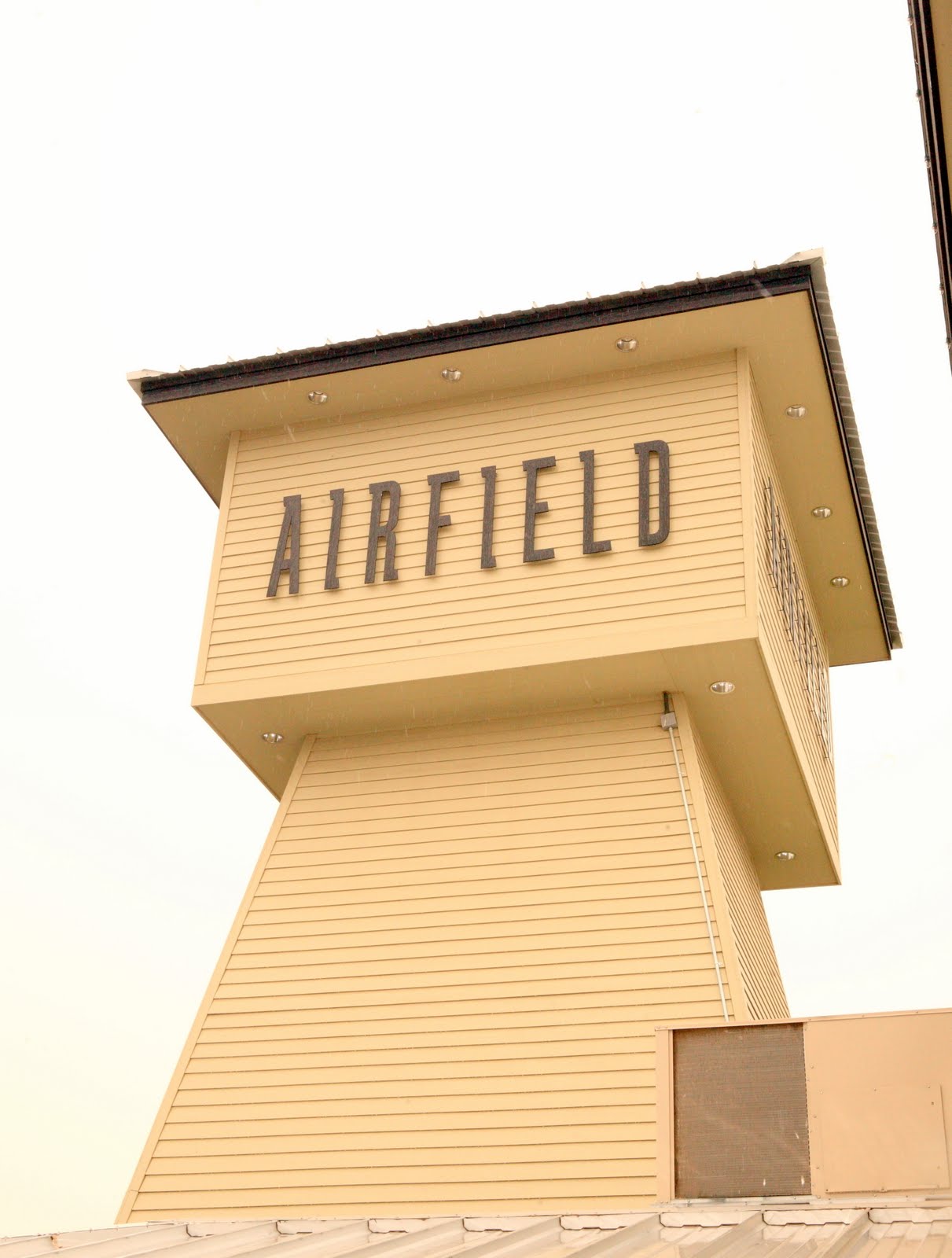
Airfield Estates is steeped in the prodigious World War II history of the Columbia Valley. Just before the war, the Miller family leased their farmland to an air transport company for a few years in order to build an airbase to train military pilots.
After the war, Lloyd Miller purchased the buildings that were erected on the site to house the pilots and equipment. Even though crops have been planted in the fields, you can still see the remnants of dirt runways. The post war generation replanted the site to vitis vinifera grapes.


A number of buildings and three dirt runways were built on the property, and an arial shot taken after the war clearly shows the half-mile-plus airstrips on the property even after crops were planted. Six of these airstrips happen to have been built in a horseshoe around the nearby Hanford Site where the first atomic bomb was developed and speculation is that they were strategically placed for surveillance and potential defense of this first US nuclear site.


Winemaker Marcus Miller with his father Mike

The 860 acres of vegetables and cattle, now long gone, were replaced with grapevines in 1968 and are now home to 26 different varietals. Airfield wines are made from 100% estate grown grapes in the Yakima Valley AVA (American Viticultural Area- wine geek speak for an area with distinct character, soil or climate that makes the wine different from the general region).


Alright already, how’s the wine? The 2009 Bombshell (45% Merlot, 41% Syrah, 8% Malbec, 4% Sangiovese, 2% Petit Verdot) was fun to drink; the Merlot was distinctive with a beautiful, light lemon finish and The 2008 Aviator (50% Cabernet Sauvignon, 25% Merlot, 10% Cab Franc, 10% Petit Verdot, 5% Malbec), which winemaker Marcus Miller pointed me to as his personal favorite, is a beautifully balanced blend with perfect vanilla and spice notes.


Elegance in a glass


Hightower Cellars, adjacent to Tapteil at the top of Red Mountain was the other big winner in my tasting trails. Kelly and Tim Hightower, along with the ever-vigilant Riley, planted 15 acres in Bordeaux varietals in 2005 and currently source fruit from the Horse Heaven Hills and Walla Walla AVA’s. Tim and Kelly bottle a stellar Cabernet Sauvignon and his elegant Reserve Blend is worth seeking out.


Riley, Greeter and Foreman at Hightower


As much as Washington is (rightly) touted for it’s Riesling and Guwertztraminer I must confess a new love for it’s Cabernet, Merlot and Syrah. A perfect pairing with grilled ribeye steak, kabobs or BBQ, I will definitely be shopping the Washington section in my local wine shop from now on. Look for estate bottlings, AVA’s such as Red Mountain, Yakima Valley and Horse Heaven Hills and get out of your California rut in general. There is some great juice in this state - don’t miss it!

Friday, April 8, 2011

Sugar Shack: The Real Thing


This part of Minnesota is a mixed Laurentian forest on the edge of what was once The Big Woods, detailed eloquently in Laura Ingalls Wilder's book of the same name. The Big Woods covered a huge area of the United States; mostly a mix of Elm, Oak and Sugar Maple that thinned out as it reached the open prairie grasslands of the Midwest. 


A backyard evaporator
 The cycle of cold nights and warm days in this part of the country begins to bring the trees alive. It will be weeks before bud break but the sap is now running full tilt. Maple sugaring, once common practice in the northern U.S., has given way to the use of table sugar purchased at the local mega grocer and consumed by the pound. But it does still exist both in small scale commercial operations and backyard 'sugar shacks' in this area.


Collecting sap


When I went looking for local syrup in my neighborhood, blue bags hanging from trees scattered through the woods told me I had found what I was looking for. I stopped my car to chat with a group of friends boiling down sap in the yard of their friend, a disabled Vietnam Vet. They tap 130 or more maple trees each year and create a product he can sell from his home. Their handmade evaporator was a simple wood firebox with a shallow evaporating pan attached to the top. Stainless steel sheets laid across the top created condensation and allowed the excess water to drip away. 


30 gallons of sap will make less than a gallon of Syrup


Brambleberry Farm makes Fruit Syrups & Pure Maple Syrup
 Another nearby producer, Jim Fruth from Brambleberry Farm in Pequot Lakes, has been sugaring since the early 1970's. He creates an amazing array of products from his small acreage of over a dozen different fruits and berries. Sumac Syrup, Blueberry Hot Pepper Sauce, Raspberry Jalapeno Jam and Chokecherry Syrup are common products at his local farmer's market stall.


Jim Fruth at his evaporator


Jim taps 250-300 maple trees in an average year and spends weeks at his evaporator creating syrup to sell throughout the season. He is innovative about the process, adding a 'bubbler' to his evaporator to speed the evaporation process and filtering his sap a total of 5 times before bottling. This is clearly not a hobby for Jim but it clearly is a labor of love. He allows me to taste the raw sap and I am shocked that it has almost no flavor. It is only the beautiful slightly caramelly aroma from the evaporator a few yards away tells of what will come.


You will find lots of unusual and flavorful goodies at Brambleberry Farm
 As I drive the few miles back home, I wonder how we have become so separated from the food we eat. Why is the making of this ancient American sugar a complete mystery to me? When did high fructose corn syrup, mixed with chemical colorants and 'maple flavoring' that actually contains no maple at all, replace this amazing and delicate delight of spring? Comparing the two on the grocery store shelf seems silly; as if comparing a steak to a head of lettuce. How have we come to believe that a completely artificial chemical concoction is maple syrup? Hmm.


Spiles are used to tap maple trees

Sap collection buckets


Tube style taps


Making real maple syrup involves hiking through the woods in March and April, drilling trees, tapping in the spiles and hanging your containers. Once or twice daily, you empty each container (often a gallon or more), carry it back to your evaporator, filter the lot and begin boiling down the sap. A single gallon of maple syrup is produced from about 40 gallons of sap. 


Tubes are linked & empty into a pail


No wonder corporations would rather feed us a mixture of ingredients that smell 'mapley'. This is real work with highly varied results from year to year. If the weather is just right, you get a great deal of sap. If springtime nights are too warm or the weather changes too quickly, you may get little return for your trouble.

Red paint makes it easier to identify trees quickly when tapping


Future Maple Trees
 When Severt Aarhus emigrated from Norway in 1894 at the age if 19, he came to this area to farm a 160 acre homestead near South Long Lake, a few miles south of Brainerd, Minnesota. He farmed the fields and managed his mixed woods of birch, oak and sugar maple until his death in 1972. I like to think he would be proud to know, 39 years after his death, that his great-great grandchildren are sugaring in the same beautiful woods, gathering sap in much the same manner as he did over his lifetime on the farm.


The new 'sugar shack' at Severt's Woods


The only difference is the soon-to-be commercially licensed sugaring operation on the property. Kent Montgomery, Severt's great grandson, recently built a commercial building and evaporator and hopes to be distributing his product in local stores next spring. 


Commercial Evaporator at Severt's Woods


Like many others in the area, Kent and his wife Paula are able to sell their product from their home or at farmers markets and festivals, but not commercially without the steps he is now taking. Once the current process is complete, they will be able to sell their product to local groceries and co-ops. The down side? He has had to work with no less than 6 regulatory agencies in the state and county in order to take his product to a larger audience. 


I, personally, find it confusing that the syrup is considered perfectly safe to sell to people from a roadside stand, even if it is boiled over a campfire in your backyard, but to sell it inside the local co-op, one needs to invest tens of thousands of dollars. Kent is not building a factory. He is tapping fewer trees than many of the backyard producers I met. He is boiling sap and sealing it in sterile bottles as he has done safely for years. Yet the government regulates him as a food processing plant on the same scale as General Mills.

Collecting one drop at a time

 Don't get me wrong, food safety is a serious thing, but it is not the little guys who are making people sick. Jenny-O is one of dozens of mass producers currently in the news, once again issuing recalls on their own factory produced products. Factory-farmed eggs, mass produced peanut butter and ground beef have all been recent culprits of food borne illness on a national level.


Sap buckets


 Is it possible for us to get to a point where we have reasonable legislation for artisan producers that does not put the kind of financial pressure on small producers as the label “organic” has done? How can we allow start up companies of artisan products to thrive if they cannot afford to test the market on a small scale and grow? Or to decide to work happily on a small local scale forever? 


Severt's Woods Pure Maple Syrup


I walked into my local grocery store yesterday and stood in the syrup aisle. There were three shelves filled with dozens of brands of 'artificial maple flavored' corn syrup and one brand of pure maple syrup. It was made in New York state. How far have we come from young Severt's woods? A very long way.


Maple & Banana Walnut Pancakes
These rich, filling pancakes are easy to make and chock full of bananas. Perfect for brunch after a hike in the woods.


2 cups Organic Unbleached Flour
½ cup Brown Sugar, firmly packed
½ tsp Baking Soda
1 tsp aluminum free Baking Powder
1/8 tsp Kosher Salt
3 medium Bananas
½ cup Pure Maple Syrup
1/2 tsp each Cinnamon & freshly grated Nutmeg
2 Eggs, slightly beaten
2 cups Buttermilk
¼ cup (½ stick) Butter, melted
½ cup lightly toasted Walnuts, chopped

In a large bowl combine the flour and the brown sugar. Whisk in the baking soda, baking powder and salt. Set aside. 

Mash the bananas together with the maple syrup and spices in a medium bowl. Add the eggs and buttermilk and mix thoroughly.

Add the buttermilk mixture to the dry ingredients all at once and stir just to combine. Mixture will have some lumps. Stir in the melted butter and the walnuts.

Preheat a flat griddle over medium heat. Grease the griddle lightly with butter. Pour the batter, 1/3 cup at a time onto the greased griddle. Bake for 1 ½ – 2 minutes per side.

Cakes may be held in a 200 degree oven on a warm plate until all are baked and ready to serve.

Serve the banana pancakes with butter and lots of local Pure Maple Syrup. Serves 6.

Recipe Notes:
  • If the batter is too thick, add milk, 1 Tbsp at a time.
  • Producers who are not commercially licensed may not advertise their products under current law. Look for locally produced 'PURE MAPLE SYRUP' at your farmers market, watch for roadside signs or ask around.
  • Vote with your dollars. Pure Maple Syrup is not cheap because it is not cheap to produce. Ask your grocer to bring in Pure Maple Syrup made by small commercial producers in your area.
  • Introduce your friends and family to local, Pure Maple Syrup. You will be amazed at the number of people who have never experienced the real thing.
  • Add Pure Maple Syrup to sweet potatoes, butternut squash, carrots, and other veggies for variety from boil 'em & butter 'em boredom. You can add spices like Cinnamon, Cardamom, Nutmeg, etc. too, for a whole new taste treat.
  • Maple is a great flavor in baking also. Try it in oatmeal cookies and quick breads.
    When substituting Maple Syrup for Granulated Sugar in baking: Instead of 1 cup of granulated sugar in recipes, use ¾ -1 cup of maple syrup, to taste. In baking, reduce the liquid by 2-4 tablespoons per 1 cup maple syrup used, add 1/4 tsp baking soda and reduce the oven temperature by 25 degrees. Your finished product will carry some of the flavor of the maple syrup. (try this in oatmeal cookies!)


Monday, April 4, 2011

Spring Chickens: Crustless Quiche

Local, farm fresh eggs


My sidekick, Maggie
Cold nights and warming days signal the true coming of spring in the north woods. While snow still sits in patches on the ground in my yard, that most beautiful sign of spring is also present: mud. As Maggie and I begin to walk the neighborhood again, the snow melt creates little rivers along the road. Cars driving past crush any white stuff still on the road into a slushy mess; frozen tonight but gone tomorrow. 


Maggie lags behind me today, nose to the soil wherever it appears through the snow along the roadside. She closes her eyes and intently breathes in some other-worldly scent that wholly absorbs her attention. “Spring! The smells, finally”. I kick at a patch of snow near the mailbox at the end of our neighborhood saunter and wonder if this is the last of the stuff for this year.

last season's echinacea

Mail in hand, I aimlessly wander through the perennial garden back toward the house. The tall, ghostly- grey stems of Shasta daisies stand stark and brittle-dry in the mushy soil. Birds have been feeding on the echinacea seeds, leaving some with a look strangely reminiscent of Maynard Keenan's mohawk.

I am shocked to discover swollen buds on my black currant bushes even though their feet are firmly planted in 6” of snow and rhubarb, beginning to crown under the thick, snow cone like, slushy snow. The plants seem to know that spring is here, no matter what the weather.


One sure sign of spring for me is the return of an abundance of wonderfully flavorful, farm fresh eggs. A side by side comparison of yolk color and flavor will make you a convert in a moment if you have not become hooked already. (The USDA considers eggs “fresh” until 45 days after they are packed – our tax dollars at work, once again.)

One of the henhouse gang

Today is 'town day' and I take the opportunity to stop at The Farm at St. Mathias for fresh eggs along my travels. Arlene's hens have just begun to lay again after their winter molt – a sort of rest period mother nature sends these feathered ladies in the coldest months of the year.

In our age of everything-all-the-time, we sometimes forget that even eggs have a season. Farmers routinely used to cover eggs in melted lard and overwinter them in sand or sawdust for the months when the chickens were not laying. When removed, they simply washed the egg and then tested it by placing it in water. If the egg floated, it was bad, if it sank to the bottom, it was a 'good egg'.


Flavors of Spring


These eggs, generously given up by Arlene's 30 or so chatty hens, are destined to become a crustless quiche, thick and custardy and full of spring flavors: asparagus, leeks and cremini mushrooms. This crustless version is faster, easier for those who become consternated by pastry crust and makes for a slightly lower calorie version of a classic dish.


Crustless Quiche, fresh from the oven

Springtime Quiche
This quiche can be served warm, cold or at room temperature. It is a lovely luncheon entrée along with a small salad or a quick-to-reheat breakfast that keeps beautifully in the refrigerator for a few days.

1 fresh Leek, light colored part only, cut into rings and washed
4-5 large Cremini Mushrooms, sliced
1/3 pound of fresh, local (if you can find it) Asparagus
1 Tbsp Olive Oil
½ tsp dry Dill Leaves
Kosher Salt and ground White Pepper, to taste
¾ cup freshly grated Gruyere Cheese
¼ cup freshly grated Parmesan Cheese
5 large, Farm Fresh Eggs
½ cup Sour Cream
½ tsp Dijon Mustard
12 oz rBGH-Free Heavy Cream

Cut light colored parts of leek into thin rings, rinse well, pulling them apart as you rinse to remove any sand. Slice the mushrooms and break or cut the asparagus into 1” pieces.

Lightly saute the veggies


Heat olive oil in a pan and saute the leeks, mushrooms and asparagus until asparagus is just crisp/tender and the colors have brightened. Season with the dill, salt and pepper. Cool slightly, toss with the cheeses and place into the bottom of a lightly buttered 10” deep dish pie pan.


 In a medium bowl, whisk together the eggs, sour cream and mustard. Add the cream. Add another pinch of dill if you like and lightly season with salt and pepper to taste (the cheeses will contribute more salt – don't go crazy).

Carefully pour the custard mixture over the veggies and cheeses in the pie pan. Place the dish in a preheated, 350 degree oven for 35-45 minutes until the custard is set and the quiche is golden brown. If the center looks like it is still liquid, give it more time. Think pumpkin pie.

Little pockets of melted cheese run throughout the quiche


Once the quiche is ready, remove it and cool slightly before serving. It may be served warm, cool or at room temperature. It also keeps well in the refrigerator and reheats nicely (30 seconds at a time) in the microwave for a quick breakfast. 6-8 servings


Recipe Notes:
  • Overbaking the quiche will make the custard break and result in a rubbery texture. Bake until the center is just fully set and the top is golden brown.
  • Experiment with different flavor combinations and cheeses:
    • diced ham, swiss cheese and diced green onions
    • chorizo sausage, cheddar cheese, red onion and peppers
    • spinach, bacon, artichokes, shallots and fontina cheese
    • butter-sauteed, diced green onions and crabmeat with Gruyere or Emmental Cheese
  • Lightly oil the baking dish or you will create a 'fried egg' crustiness on the bottom of your quiche.
  • Cremini mushrooms are simply Portabella mushrooms that haven't grown up yet. You will sometimes see them labeled as 'baby bellas'.
  • rGBH is a hormone given to dairy cattle to make them produce more milk. There is a great deal of information available on the web and Monsanto, its maker, has gone to great lengths to keep negative information about its affects on both cows and humans wrapped up tightly. If your milk carton is not labeled rGBH free, it isn't. Check your local COOP for great sources of local rGBH free milk in your area.
  • Leeks grow in layers and can hold onto sand from the soil. To keep grit out of your lovely custard, always wash leeks thoroughly after slicing, separating the rings.
  • Buy your cheese from a reputable shop. A good cheese monger will allow you to taste before you buy, will know how the cheeses should be best used and can direct you to others you might like. Morey's Market in Baxter is the best source for quality cheese in my area. Beats the heck out of guessing in a mega-chain grocery store.
  • If you are worried about a bad egg ruining your dish, break them into a dish, one by one, before adding them to the main mixing bowl. I rarely, if ever, come across bad eggs.


Tuesday, March 29, 2011

Taking a Dip: Roasted Red Peppers with Creamy Goat Cheese

Roasted Red Pepper Dip with Creamy Goat Cheese


“Cooking is easy – you just add heat.” - Don Booth

Don Booth is one of the most animated characters I know. I cannot say his name among our friends without smiling. His colorful antics and determination to make life something more exciting than the life of the average Joe turn even the most common of meetings into occasions. In three simple words: Don loves life. 


Three perfect companions: onion, pepper & tomato
His abandon in cooking is a gift that I wish I could pass along to those of my friends who enjoy food but are intimidated by the kitchen. He is correct when it comes to culinary arts: cooking doesn't have to be complicated. You can spend a lot of money and a lot of hours in the kitchen, only to be left frustrated and standing in a mess – or, you can simplify things and 'just add heat'. A few basic ingredients combined and simmered are often the most rich, satisfying and memorable.

Roasted red peppers are, to me, one of those unforgettable flavors. I have never been a fan of peppers eaten raw, but the transformation that takes place when they are roasted over a flame, or slow simmered on the stove is a miracle of cooking. Their sharp acidity softens and the essence of the bell pepper flavor is exposed. Combine this with other vegetables that behave similarly; onions, tomatoes; and you have a whole new flavor experience.

This is a dip that I often make when end of summer garden produce is plentiful and freeze to use later when I am craving summer sun (now). I have used this as a stuffing for Baked Chicken Breasts, tucking a pat of goat cheese inside as well and I have cooked Italian Sausages in this versatile mixture (sans goat cheese). Those of you who hate the kitchen ~ you know who you are ~ I dare you. Pour a glass of wine or your favorite cocktail and give this a whirl. All you have to do is add heat.

Cheers, Don.


Roasted Red Pepper Dip with Creamy Goat Cheese

Quick and easy fare, this red pepper dip is devoured by my guests whenever I serve it. You can make this from ingredients you probably already have on hand in less than an hour, start to finish. 

 
Julienned peppers and onions

5 Tbsp Pure Olive Oil
2 Large Fresh Red Bell Peppers
1 Large Sweet Yellow Onion
3 Roma Tomatoes
1 tsp Crushed Garlic
¾ cup water
1 Tbsp Balsamic Vinegar
Kosher Salt and freshly ground Black Pepper, to taste
6 oz Chevre Cheese


Julienne cut the red peppers and onions. You should have approximately equal amounts by volume. Trim the stem end off the tomatoes and cut them into quarters. Set tomatoes aside. Sip some wine. 


Heat the olive oil in a large pot. Once the oil is good and hot, add the peppers and onions. Stir over high heat for about 5 minutes. (The goal is not to brown the veggies, only to quickly break them down.)
Reduce the heat to medium-high and add the garlic and tomatoes. Continue to stir periodically. As veggies begin to release their juices, they may begin to stick. Add water and balsamic vinegar. Continue cooking until veggies are soft. 


Once the veggies are soft (15-20 minutes), use a potato masher to crush them into a chunky texture.
Taste the mixture and season to taste with kosher salt and fresh ground black pepper.

Pour into a oven-proof dish. Place the Chevre cheese into the center of the dip and bake the dish at 375 degrees until hot and bubbly (about 20-25 minutes). Serve with crackers or toasted bread rounds.


Recipe Notes:
  • Julienne cutting vegetables simply means to cut them into approximately equal size, thin strips. The French are VERY precise when they do this and create perfectly exact little matchsticks. The more uniform the cut, the more evenly they cook. That said, I am not French. Don't worry about perfection.
  • Chevre is a creamy white goat cheese about the consistency of cream cheese. It is not too strong and pairs well with the dip.
  • Crushed garlic is a puree of fresh garlic. I love the way it cleanly dissipates into a dish vs. minced garlic whose flavor is sharper and stands out more (and gets stuck in your teeth). You can buy a special tool or use a mortar and pestle to crush your own. I buy mine ready to use.
  • If you decide to freeze this, leave out the goat cheese until you bake it just before serving.
  • If you still hate to cook after making this, come over we'll have a glass of wine together. Consider it therapy.